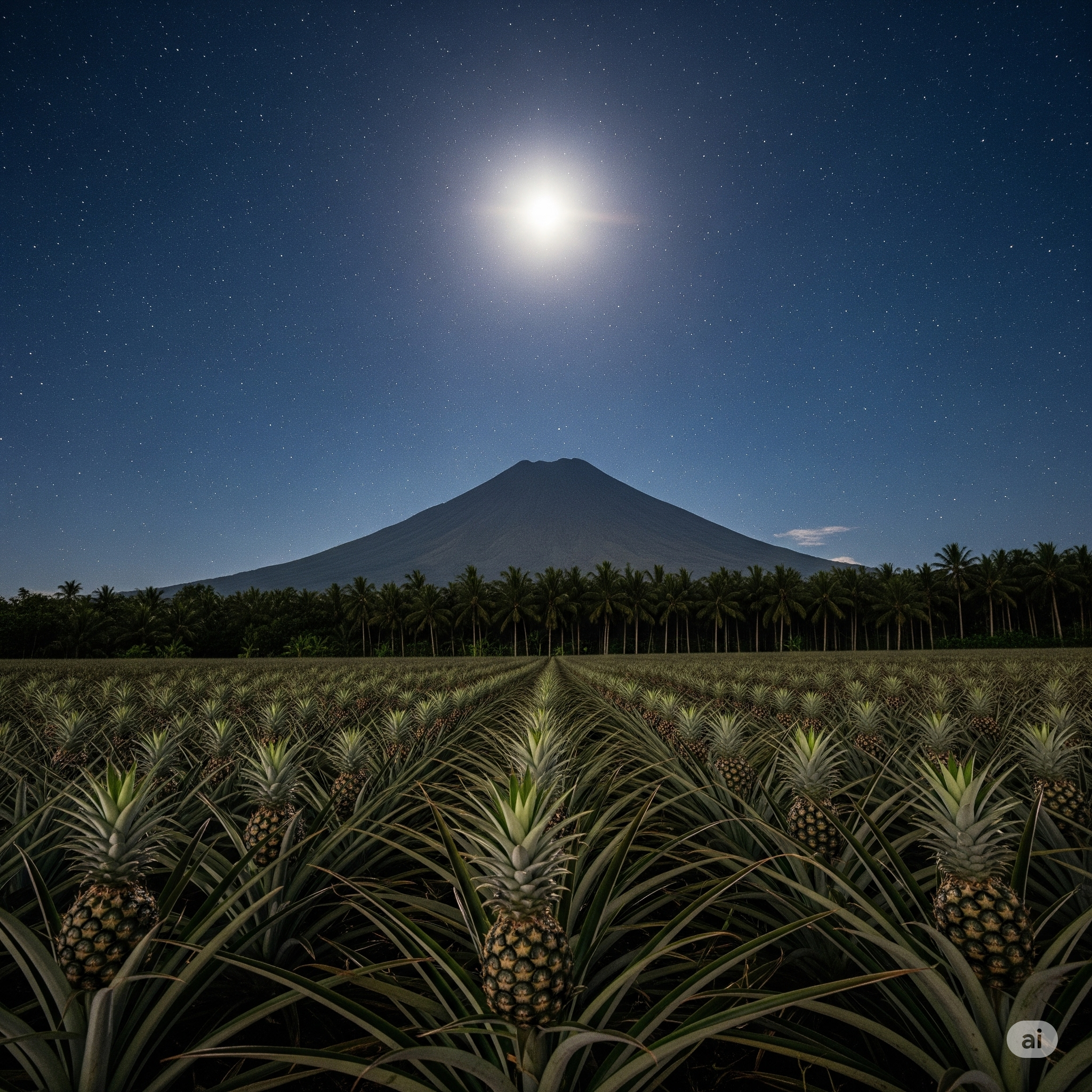
Pineapples:
Originating from the region around the Paraná and Paraguay Rivers (present-day Brazil, Paraguay, and Argentina), it was an important economic plant in the development of Indigenous civilizations in the Americas. The Tupi-Guarani and Carib peoples called the fruit, a staple crop, nanas (excellent fruit) and several varieties were grown. As well as food, the pineapple was a source of medicine, fermented to become alcohol, its fibers made into robes and bow strings and thread for cloth. When creating its fruit, it usually produces up to 200 flowers, although some large-fruited cultivars can exceed this. Once it flowers, the individual fruits of the flowers join together to create a multiple fruit. In 1493, Christopher Columbus himself first encountered the pineapple on his voyage back home. This purportedly happened on the island of Guadeloupe. Together with his crew of Spaniards, they coined the strange fruit “piña”—or pinecone—because of its strange and spiky ovoid shape. It’s safe to say they were fans of the fruit, since they brought stores of them back to Spain and ultimately shared them with Queen Isabella, as a gift.